Ensuring compliance with international standards for rear seats welding jigs is of paramount importance for a rear seats welding jig supplier like myself. In this blog, I'll share some key strategies and practices that can help us achieve and maintain this compliance, which is not only crucial for product quality but also for market competitiveness.
Understanding International Standards
The first step in ensuring compliance is to have a comprehensive understanding of the relevant international standards. There are several standards that apply to rear seats welding jigs, such as ISO (International Organization for Standardization) standards. ISO 9001, for example, focuses on quality management systems. It sets out the criteria for a quality management system and is based on a number of quality management principles including a strong customer focus, the involvement of top management, a process approach, and continual improvement.
Another important set of standards is related to safety. For instance, standards like ISO 14119 deal with interlocking devices associated with guards, which are often used in welding jigs to prevent unauthorized access during operation. These standards ensure that the jigs are designed and built in a way that minimizes the risk of accidents and injuries to operators.
We also need to consider standards related to the automotive industry itself. Automotive manufacturers often have their own strict requirements for the components they source, including rear seats welding jigs. These requirements may cover aspects such as dimensional accuracy, material quality, and welding performance. By thoroughly researching and understanding these standards, we can set the right benchmarks for our product development and manufacturing processes.
Design and Engineering
Once we have a clear understanding of the standards, the next step is to incorporate them into the design and engineering of the rear seats welding jigs. This starts with the selection of appropriate materials. The materials used in the jigs must meet the strength, durability, and corrosion resistance requirements specified by the standards. For example, high - strength steel may be used for the main structural components of the jig to ensure it can withstand the forces exerted during the welding process.

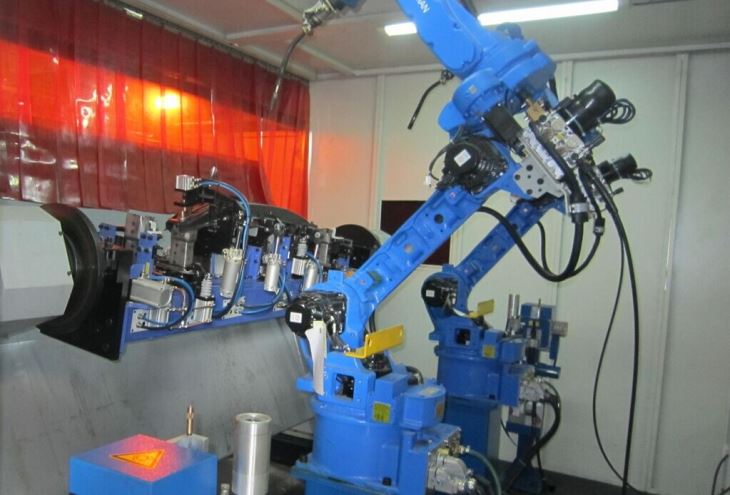
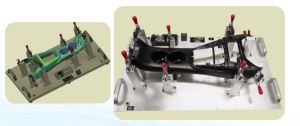
In terms of design, we need to pay close attention to dimensional accuracy. The jigs must be designed to hold the rear seat components in the correct position with a high degree of precision. This is crucial for ensuring that the welded joints are of high quality and that the final rear seat assembly meets the automotive manufacturer's specifications. Computer - aided design (CAD) software can be used to create detailed 3D models of the jigs, allowing us to simulate the welding process and make any necessary adjustments before the actual manufacturing begins.
Another important aspect of design is the integration of safety features. As mentioned earlier, interlocking devices and guards should be incorporated into the design to prevent operators from accessing the dangerous areas of the jig during operation. Additionally, the jigs should be designed for easy maintenance and cleaning, as this can help to ensure their long - term performance and compliance with standards.
Manufacturing and Quality Control
During the manufacturing process, strict quality control measures must be in place to ensure that the rear seats welding jigs comply with the international standards. This begins with the inspection of incoming raw materials. Each batch of materials should be tested to ensure that it meets the specified quality requirements. For example, material samples can be tested for chemical composition, hardness, and tensile strength.
In the manufacturing process itself, we need to follow standardized procedures. Welding processes, for example, should be carried out according to the relevant welding standards. This includes controlling parameters such as welding current, voltage, and welding speed. Non - destructive testing methods, such as ultrasonic testing and X - ray inspection, can be used to detect any internal defects in the welded joints.
At the end of the manufacturing process, the finished jigs should undergo a comprehensive final inspection. This inspection should cover all aspects of the jig, including its dimensions, functionality, and safety features. Only jigs that pass this final inspection should be released for shipment to the customers.
Documentation and Traceability
Documentation is a critical part of ensuring compliance with international standards. We need to maintain detailed records of every aspect of the product development, manufacturing, and quality control processes. This includes design drawings, material certificates, test reports, and inspection records. These documents not only provide evidence of compliance but also allow for traceability in case of any quality issues or recalls.
For example, if a customer reports a problem with a particular rear seats welding jig, we can use the documentation to trace back the source of the problem. We can check the material certificates to ensure that the correct materials were used, review the manufacturing records to see if any deviations from the standard procedures occurred, and examine the test reports to verify the quality of the welded joints.
Training and Staff Development
Our employees play a crucial role in ensuring compliance with international standards. Therefore, it is essential to provide them with adequate training and development opportunities. This includes training on the relevant international standards, as well as on the specific design, manufacturing, and quality control processes used in the production of rear seats welding jigs.
For example, welders should be trained on the latest welding techniques and standards to ensure that they can produce high - quality welded joints. Quality control inspectors should be trained on how to use the various testing equipment and methods to accurately detect any defects in the jigs. By investing in our employees' skills and knowledge, we can improve the overall quality of our products and ensure compliance with international standards.
Continuous Improvement
Compliance with international standards is not a one - time achievement but an ongoing process. We need to continuously monitor and evaluate our processes and products to identify areas for improvement. This can be done through regular internal audits, customer feedback, and benchmarking against industry best practices.
For example, if we receive feedback from a customer that a particular feature of the rear seats welding jig could be improved, we should take this feedback seriously and use it to drive product development. We can also participate in industry conferences and trade shows to learn about the latest trends and technologies in the field of welding jigs and incorporate these into our products.
Conclusion
Ensuring compliance with international standards for rear seats welding jigs is a complex but essential task for a rear seats welding jig supplier. By understanding the standards, incorporating them into the design and engineering process, implementing strict quality control measures, maintaining detailed documentation, providing training to our staff, and continuously improving our processes, we can produce high - quality jigs that meet the requirements of our customers and the international market.
If you are in the market for high - quality rear seats welding jigs that comply with international standards, we would be more than happy to discuss your requirements. We offer a wide range of products, including Automotive Seat Welding Fixture, Car Stamping Parts checking fixture, and Front Bumper Welding Fixture. Contact us today to start a procurement negotiation and find the perfect solution for your needs.
References
- ISO 9001: Quality management systems - Requirements
- ISO 14119: Safety of machinery - Interlocking devices associated with guards - Principles for design and selection