Hey there! As a supplier of Cupholder CMM holding jigs, I've spent a ton of time thinking about how to make these things work better. In this blog, I'll share some practical tips on enhancing the functionality of a Cupholder CMM holding jig.
Understanding the Basics
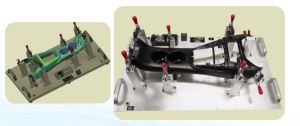
First off, let's quickly go over what a Cupholder CMM holding jig is. It's a crucial tool used in the manufacturing process to hold cupholders in place during coordinate measuring machine (CMM) inspections. This ensures accurate measurements and high - quality products.
If you're looking for more information on CMM holding fixtures, you can check out the Auto Metal Parts CMM Holding Fixture. It gives you an idea of the broader range of CMM holding solutions out there.
Material Selection
One of the first steps in enhancing the functionality of a Cupholder CMM holding jig is choosing the right materials. The material should be strong enough to withstand the forces applied during the CMM inspection process. Metals like aluminum and steel are popular choices.
Aluminum is lightweight, which makes it easier to handle and move around the manufacturing floor. It also has good corrosion resistance, which is important if the jig is going to be used in a moist or humid environment. On the other hand, steel is incredibly strong and durable. It can handle heavy - duty use without deforming easily.
When selecting the material, you also need to consider the cost. Aluminum is generally less expensive than steel, but steel offers better long - term value in terms of durability.
Design Optimization
The design of the Cupholder CMM holding jig plays a huge role in its functionality. A well - designed jig should be able to securely hold the cupholder in place while allowing easy access for the CMM probe.
One way to optimize the design is to use a modular approach. Instead of having a single, monolithic jig, you can design it in modules that can be easily replaced or reconfigured. This makes it more versatile and can save you a lot of time and money in the long run.
Another design consideration is the shape of the holding surfaces. The surfaces that come into contact with the cupholder should be contoured to match the shape of the cupholder. This ensures a snug fit and reduces the risk of the cupholder moving during the inspection.

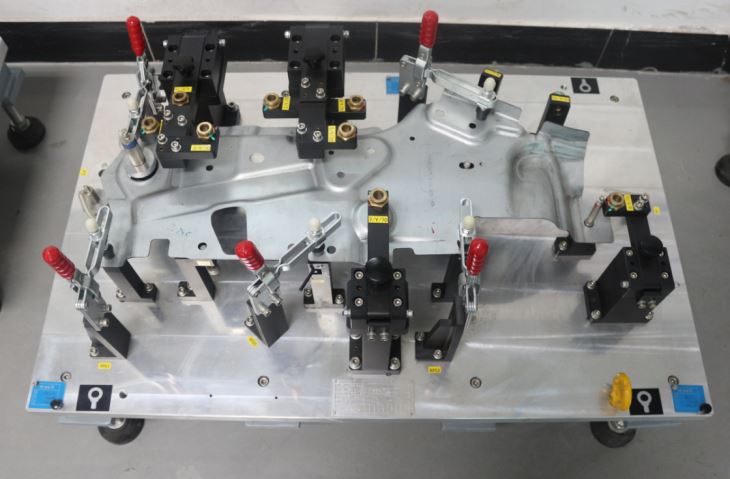
If you're interested in specific Cupholder CMM holding fixtures, take a look at the Cupholder CMM Holding Fixture for some inspiration.
Precision Machining
Precision machining is essential for a high - functioning Cupholder CMM holding jig. The dimensions of the jig need to be accurate to within a very small tolerance. Even a tiny deviation can lead to inaccurate measurements during the CMM inspection.
Investing in high - quality machining equipment and skilled machinists is crucial. Computer - numerical - control (CNC) machining is a great option as it offers a high level of precision and repeatability.
After the machining process, it's important to perform thorough quality control checks. This can include using CMMs to measure the jig itself to ensure that it meets the required specifications.
Surface Treatment
Surface treatment can significantly enhance the functionality of a Cupholder CMM holding jig. A smooth surface finish can reduce friction between the jig and the cupholder, making it easier to place and remove the cupholder.
One common surface treatment is anodizing for aluminum jigs. Anodizing creates a hard, protective layer on the surface of the aluminum, which not only improves its durability but also gives it a nice appearance.
For steel jigs, a process like powder coating can be used. Powder coating provides a tough, corrosion - resistant finish that can also be customized in terms of color.
Ease of Use and Maintenance
A functional Cupholder CMM holding jig should be easy to use and maintain. It should have clear markings and instructions on how to operate it. For example, there should be indicators showing where the cupholder should be placed and how to secure it properly.
Maintenance is also important. The jig should be designed in a way that makes it easy to clean and lubricate. Regular maintenance can extend the lifespan of the jig and ensure that it continues to perform at its best.
Compatibility with CMM Equipment
The Cupholder CMM holding jig needs to be compatible with the CMM equipment that will be used for the inspection. This means that it should be able to fit properly on the CMM table and allow the CMM probe to access all the necessary measurement points on the cupholder.
Before finalizing the design of the jig, it's a good idea to consult with the CMM equipment manufacturer to ensure that there are no compatibility issues.
Testing and Validation
Once the Cupholder CMM holding jig is manufactured, it's important to test and validate its functionality. This can involve using it in a real - world manufacturing environment to see how well it holds the cupholder and how accurate the CMM measurements are.
Testing should be done with a variety of cupholder designs to ensure that the jig is versatile. Any issues or areas for improvement should be identified and addressed before the jig is put into full - scale production.
Conclusion
Enhancing the functionality of a Cupholder CMM holding jig is a multi - faceted process that involves material selection, design optimization, precision machining, surface treatment, and more. By following these tips, you can create a jig that is not only functional but also cost - effective and easy to use.
If you're in the market for a high - quality Cupholder CMM holding jig or want to discuss how to improve the functionality of your existing jigs, don't hesitate to reach out. We're here to help you take your manufacturing process to the next level.
References
- General knowledge of manufacturing and CMM inspection processes
- Industry best practices for CMM holding fixture design and production