In the realm of modern manufacturing, achieving uniform welds is a critical factor in ensuring the quality, durability, and performance of welded products. Robotic MIG (Metal Inert Gas) weld fixtures have emerged as a game - changer in this regard, offering a high - level of precision and consistency that manual welding often struggles to match. As a supplier of Robotic MIG Weld Fixtures, I am excited to delve into how these fixtures play a pivotal role in guaranteeing uniform welds.
1. Precise Workpiece Positioning
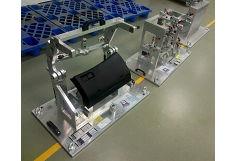
One of the primary ways a Robotic MIG Weld Fixture ensures uniform welds is through precise workpiece positioning. In a welding operation, even the slightest deviation in the position of the workpiece can lead to inconsistent welds. A well - designed Robotic MIG Weld Fixture is engineered to hold the workpiece in a fixed and accurate position throughout the welding process.
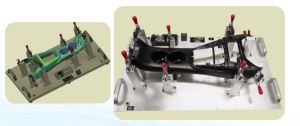
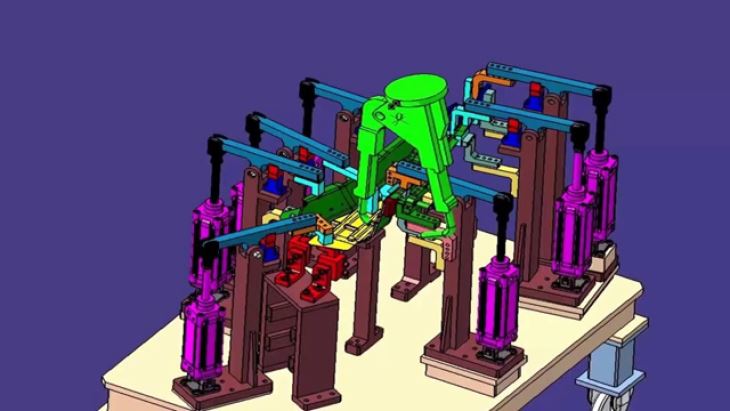
The fixture uses various clamping mechanisms, such as pneumatic or hydraulic clamps, to securely hold the workpiece. These clamps are designed to apply a consistent force, preventing any movement or vibration of the workpiece during welding. For example, in the automotive industry, when welding Auto Pillar Parts Welding Fixture, the fixture precisely positions the pillar parts, ensuring that the welds are made at the exact locations specified in the design. This precision is crucial as any misalignment can compromise the structural integrity of the vehicle.
Moreover, the fixture is often custom - designed to fit the specific geometry of the workpiece. This means that it can accommodate complex shapes and contours, holding the workpiece firmly in place and allowing the robotic welding arm to access all the necessary welding points with ease. By eliminating the variability in workpiece positioning, the fixture lays the foundation for uniform welds.
2. Repeatability
Repeatability is another key aspect of ensuring uniform welds, and Robotic MIG Weld Fixtures excel in this area. Once a fixture is set up and calibrated for a particular welding job, it can reproduce the same welding conditions with a high degree of accuracy for every subsequent workpiece.
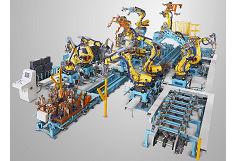
The robotic welding system, in combination with the fixture, follows a pre - programmed path and welding parameters. The fixture ensures that each workpiece is presented to the welding torch in the same orientation and position as the previous one. This means that the heat input, welding speed, and wire feed rate remain consistent across all the welds. For instance, in a Robotic Welding Fixture Line, where multiple workpieces are welded in a continuous process, the fixture's repeatability ensures that every weld on every workpiece is of the same quality.
The use of advanced sensors and feedback systems in modern Robotic MIG Weld Fixtures further enhances repeatability. These sensors can detect any minor variations in the workpiece position or welding conditions and make real - time adjustments to maintain the desired welding parameters. This level of automation and control significantly reduces the chances of human error and ensures that each weld is as uniform as the last.
3. Welding Parameter Control
A Robotic MIG Weld Fixture is an integral part of a system that allows for precise control of welding parameters. Welding parameters such as voltage, current, wire feed speed, and travel speed have a direct impact on the quality and uniformity of the weld.
The fixture works in conjunction with the robotic welding controller to ensure that these parameters are set correctly and maintained throughout the welding process. For example, the controller can adjust the wire feed speed based on the thickness of the workpiece and the type of joint being welded. The fixture holds the workpiece in a stable position, allowing the welding torch to move at a consistent travel speed, which is essential for uniform bead formation.
In addition, the fixture can be designed to provide proper shielding gas flow. Shielding gas is crucial in MIG welding as it protects the weld pool from atmospheric contamination. The fixture can be equipped with gas nozzles that are positioned to ensure that the shielding gas covers the weld area evenly. This consistent shielding gas flow helps to produce clean, uniform welds with minimal porosity.
4. Reducing Distortion
Welding often causes distortion in the workpiece due to the high heat input. Distortion can lead to non - uniform welds and dimensional inaccuracies in the final product. A Robotic MIG Weld Fixture helps to reduce distortion in several ways.
Firstly, the fixture's clamping mechanism applies a balanced force on the workpiece, which helps to counteract the thermal stresses generated during welding. By holding the workpiece firmly in place, the fixture restricts the movement of the metal as it expands and contracts, minimizing distortion.
Secondly, the fixture can be designed with cooling channels or heat sinks. These features help to dissipate the heat generated during welding more efficiently, reducing the temperature gradient across the workpiece. A more uniform temperature distribution means less thermal stress and less distortion. For example, in the welding of large metal structures, the use of a well - designed fixture with cooling capabilities can significantly improve the dimensional accuracy of the final product and ensure uniform welds.
5. Quality Assurance and Inspection
Robotic MIG Weld Fixtures also play a role in quality assurance and inspection. Many modern fixtures are integrated with inspection systems that can monitor the welding process in real - time. These systems can detect defects such as incomplete fusion, porosity, or excessive spatter.
For example, vision systems can be used to inspect the weld bead as it is being formed. The system can compare the actual weld bead shape and size with the desired specifications and flag any deviations. If a defect is detected, the robotic welding system can be programmed to stop the welding process immediately, allowing for corrective action to be taken.
In addition, the fixture can be designed to facilitate post - weld inspection. It can hold the workpiece in a position that makes it easy to access all the welds for visual inspection, non - destructive testing, or other quality control measures. By ensuring that only high - quality, uniform welds pass through the production line, the fixture helps to maintain the overall quality of the final product.
Conclusion
In conclusion, a Robotic MIG Weld Fixture is an essential tool in ensuring uniform welds. Through precise workpiece positioning, repeatability, welding parameter control, distortion reduction, and quality assurance, these fixtures offer a comprehensive solution for achieving high - quality, consistent welds.
As a supplier of Robotic MIG Weld Fixtures, we understand the importance of these factors in modern manufacturing. Our fixtures are designed and engineered to meet the specific needs of our customers, whether they are in the automotive, aerospace, or general manufacturing industries.
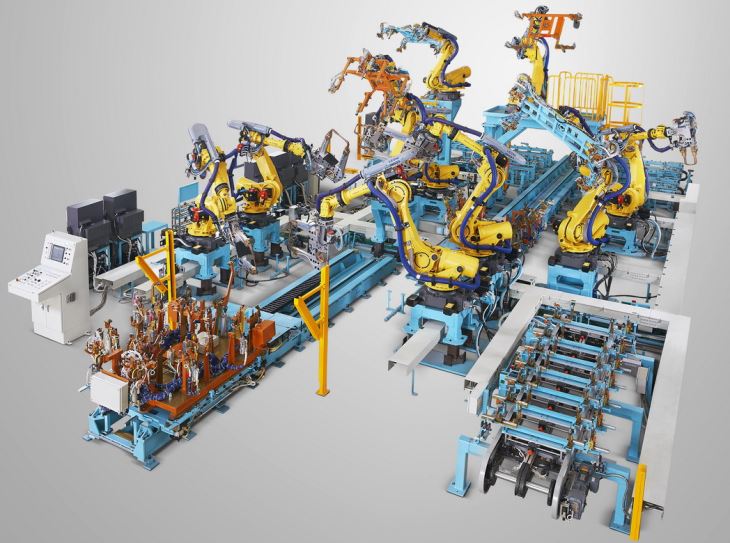
If you are looking for a reliable solution to improve the quality and uniformity of your welds, we invite you to contact us for a detailed discussion. Our team of experts is ready to assist you in selecting the right Robotic MIG Weld Fixture for your application and provide you with the support you need to optimize your welding process.
References
- "Welding Handbook", American Welding Society
- "Robotics in Manufacturing", John Wiley & Sons
- Industry whitepapers on advanced welding technologies and fixtures