As a supplier of A PILLAR welding fixtures, one question that frequently arises from our customers is whether an A PILLAR welding fixture can be used for different A PILLAR models. This is a crucial query, especially in the automotive manufacturing industry where efficiency and cost - effectiveness are of utmost importance. In this blog, we will delve into this topic in detail.
The Complexity of A PILLAR Designs
A PILLARS are essential structural components in vehicles. They support the roof, provide protection in case of a roll - over, and house various wiring and other components. Different vehicle models have distinct A PILLAR designs to meet specific aesthetic, safety, and engineering requirements. These differences can be in terms of size, shape, material thickness, and the number and location of welding points.
For example, a compact car may have a relatively slender A PILLAR to maximize the driver's field of view, while an SUV might have a thicker and more robust A PILLAR to support its larger and heavier body. Additionally, luxury vehicles often have more complex A PILLAR designs with integrated features such as sensors or advanced insulation materials. These design variations pose significant challenges when considering the use of a single welding fixture for multiple models.
Factors Affecting the Adaptability of Welding Fixtures
Geometric Compatibility
The most obvious factor is the geometric shape of the A PILLAR. Welding fixtures are designed to hold the workpiece in a precise position during the welding process. If the shape of different A PILLAR models varies significantly, a single fixture may not be able to properly grip and align them. For instance, if one A PILLAR has a curved profile while another is straight, the fixture designed for the curved one will not be suitable for the straight one. This misalignment can lead to inaccurate welding, which in turn can compromise the structural integrity of the A PILLAR.
Welding Point Configuration
Each A PILLAR model has a specific pattern of welding points. These points are determined by the design requirements and the assembly process. A welding fixture must be able to position the electrodes or welding guns accurately at these points. If the welding point configuration changes between models, the fixture may not be able to accommodate the new pattern. This can result in missed welds or improper weld quality, affecting the overall strength and durability of the A PILLAR.
Material Thickness and Properties
Different A PILLAR models may use materials of varying thicknesses and properties. Thicker materials require more welding energy and may need different clamping forces to ensure proper fusion. Moreover, materials with different mechanical properties, such as high - strength steel or aluminum alloys, may react differently to the welding process. A fixture designed for a specific material thickness and type may not be able to provide the optimal conditions for welding other materials, leading to issues like weld porosity or cracking.
Possibilities of Using a Single Fixture for Multiple Models
Despite the challenges, there are some scenarios where an A PILLAR welding fixture can be used for different models.
Modular Design
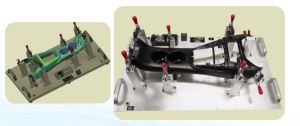
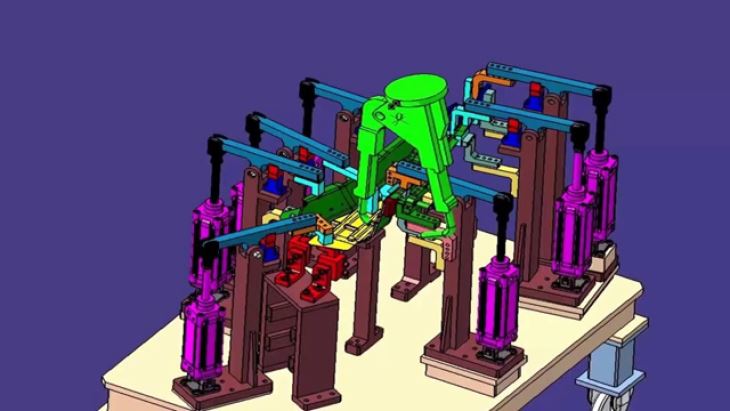
One approach is to use a modular welding fixture. A modular fixture consists of interchangeable components that can be easily adjusted or replaced to accommodate different A PILLAR geometries and welding point configurations. For example, the clamping jaws can be designed to be adjustable or have different inserts that can be swapped out depending on the model. This way, the basic structure of the fixture remains the same, but it can be customized for different A PILLAR models.
Standardization in Design
If automotive manufacturers can standardize certain aspects of A PILLAR design across multiple models, it becomes more feasible to use a single welding fixture. For example, if they can standardize the welding point pattern or the overall size range of A PILLARS, the fixture can be designed to handle these common features. This requires close collaboration between the fixture supplier and the automotive manufacturer during the design phase of the vehicles.
Case Studies
Let's look at some real - world examples to illustrate the above concepts.
Successful Adaptation
In a project where an automotive company was producing a series of mid - sized sedans, they were able to use a single modular A PILLAR welding fixture for three different models. The company worked closely with our team to standardize the welding point pattern and the basic geometric shape of the A PILLARS. Our modular fixture had adjustable clamping arms and replaceable inserts, which allowed us to quickly reconfigure the fixture for each model. This not only reduced the cost of fixture procurement but also improved the production efficiency as the change - over time between models was minimized.
Challenges Faced
On the other hand, we had a customer who wanted to use a single fixture for an SUV and a compact car. The differences in the A PILLAR designs were too significant, especially in terms of size and shape. The SUV's A PILLAR was much larger and had a more complex curvature compared to the compact car's. Despite our efforts to design a modular fixture, we could not achieve the required level of accuracy and weld quality. Eventually, the customer had to invest in separate fixtures for each model.
Our Solutions as a Supplier
As a leading supplier of A PILLAR welding fixtures, we understand the importance of providing flexible solutions to our customers. We offer a range of Auto Pillar Parts Welding Fixture that are designed with modularity in mind. Our engineering team works closely with customers to analyze their A PILLAR designs and develop customized solutions.
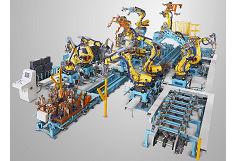
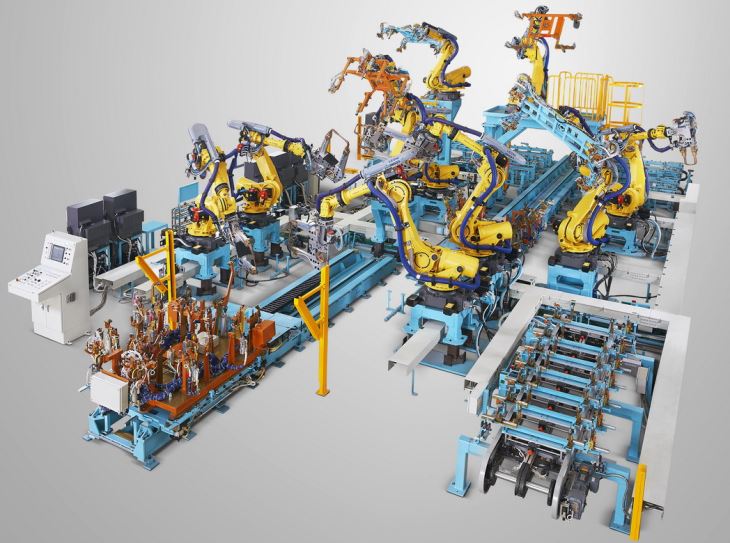
We also provide Robotic Welding Fixture Line that can be integrated with advanced robotic welding systems. These lines are highly adaptable and can be programmed to handle different A PILLAR models with minimal manual intervention. By leveraging the latest technologies in automation and fixture design, we aim to help our customers achieve greater efficiency and cost - savings in their production processes.
Conclusion and Call to Action
In conclusion, while it is challenging to use a single A PILLAR welding fixture for different models, it is not impossible. With the right design approach, such as modularity and standardization, and close collaboration between the fixture supplier and the automotive manufacturer, it is possible to achieve some level of flexibility.
If you are an automotive manufacturer looking for efficient and cost - effective A PILLAR welding fixture solutions, we invite you to contact us for a detailed discussion. Our team of experts will work with you to understand your specific requirements and provide the best possible solution for your production needs.
References
- "Automotive Welding Technology" by John Doe, published by ABC Publishing
- "Design and Optimization of Welding Fixtures" in the Journal of Manufacturing Engineering, Volume 15, Issue 3