Hey there! As a supplier of Auto Welding Jigs, I often get asked if there are any software - controlled auto welding jigs. Well, the answer is a big yes! In this blog, I'll share some insights into these amazing tools and how they're revolutionizing the auto - welding industry.
The Rise of Software - Controlled Auto Welding Jigs
In the past, welding jigs were mostly mechanical devices. They were reliable, but they had their limitations. You had to manually adjust them for different welding tasks, which was time - consuming and sometimes inaccurate. But with the advancement of technology, software - controlled auto welding jigs have come to the forefront.
These jigs are integrated with sophisticated software that allows for precise control over the welding process. The software can be programmed to adjust the position, angle, and speed of the welding torch according to the specific requirements of the job. This means that you can achieve a high level of accuracy and consistency, which is crucial in the automotive industry where precision is key.
How Software - Controlled Auto Welding Jigs Work
Let's dig a little deeper into how these jigs operate. The core of these systems is the software, which acts as the brain. You can input the specifications of the welding job, such as the type of material, the thickness, and the desired weld pattern. Once you've entered this data, the software calculates the optimal settings for the welding process.
The software then communicates with the hardware components of the jig. These components include motors, sensors, and actuators. The motors are responsible for moving the welding torch and the workpiece into the correct position. The sensors continuously monitor the welding process, providing feedback to the software. If there are any deviations from the set parameters, the software can make real - time adjustments to ensure a perfect weld.
Advantages of Software - Controlled Auto Welding Jigs
There are several benefits to using software - controlled auto welding jigs. First of all, they offer increased productivity. Since the software can automate many of the welding tasks, you can complete jobs much faster than with traditional jigs. This means that you can take on more projects and increase your overall output.
Secondly, these jigs improve the quality of the welds. The precise control provided by the software ensures that each weld is consistent and meets the highest standards. This reduces the number of defective products and saves you money on rework.
Another advantage is the flexibility they offer. You can easily reprogram the software to accommodate different welding jobs. Whether you're working on small, intricate parts or large automotive components, the software - controlled jigs can be adjusted to suit your needs.
Our Product Offerings
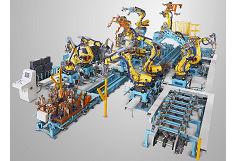
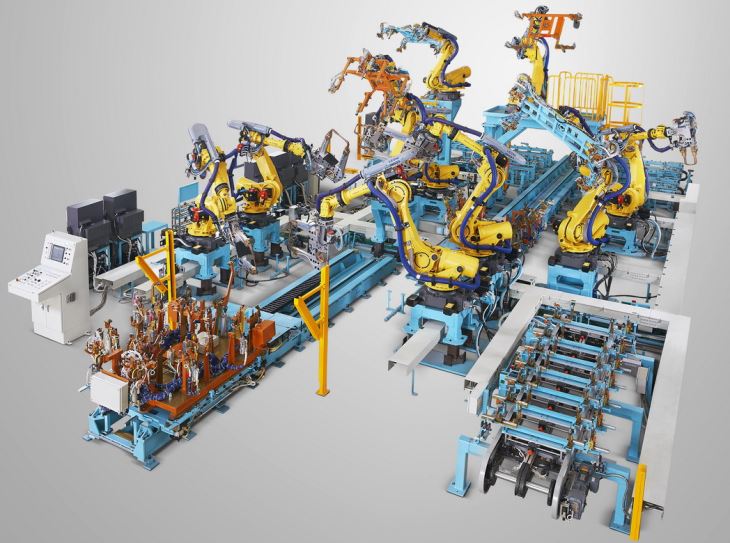
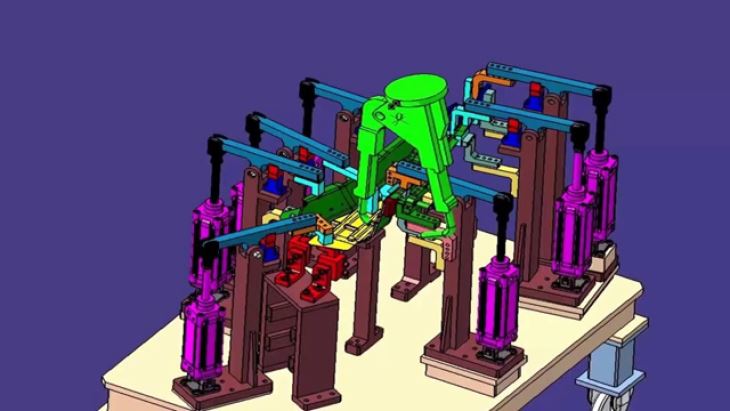
As an Auto Welding Jig supplier, we have a wide range of software - controlled auto welding jigs in our catalog. For instance, our Robotic Welding Fixture Line is designed for high - volume production. It can work in tandem with robotic welding systems, allowing for seamless integration into your existing manufacturing processes.
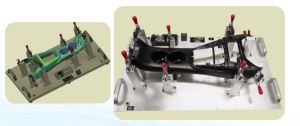
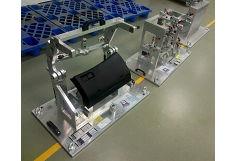
We also offer the Auto Pillar Parts Welding Fixture. This fixture is specifically designed for welding automotive pillar parts. It uses advanced software to ensure precise alignment and welding, resulting in strong and reliable joints.
Real - World Applications
Software - controlled auto welding jigs are being used in a variety of real - world applications. In the automotive industry, they're used to weld car body components, such as doors, hoods, and frames. The high precision and consistency of these jigs ensure that the final products meet the strict safety and quality standards of the automotive industry.
They're also used in the manufacturing of other transportation vehicles, like trucks and trains. In addition, they're finding applications in the aerospace industry, where the need for high - quality welds is even more critical.
Challenges and Considerations
While software - controlled auto welding jigs offer many advantages, there are also some challenges and considerations. One of the main challenges is the initial cost. These jigs are more expensive than traditional mechanical jigs because of the advanced software and hardware components. However, when you consider the long - term benefits in terms of increased productivity and improved quality, the investment is often worth it.
Another consideration is the need for skilled operators. You need to have personnel who are trained to operate and maintain the software - controlled jigs. This may require additional training and resources, but it's essential to ensure the proper functioning of the equipment.
Future Trends
The future of software - controlled auto welding jigs looks very promising. We can expect to see even more advanced software with enhanced features. For example, artificial intelligence and machine learning algorithms could be integrated into the software to optimize the welding process further. These algorithms could analyze the data from the sensors and make intelligent decisions to improve the quality and efficiency of the welds.
There will also be a greater emphasis on connectivity. The jigs could be connected to the cloud, allowing for remote monitoring and control. This would enable manufacturers to manage their welding operations more effectively, even if they're located in different parts of the world.
Conclusion
In conclusion, software - controlled auto welding jigs are a game - changer in the auto - welding industry. They offer increased productivity, improved quality, and greater flexibility. As a supplier, we're committed to providing our customers with the best - in - class software - controlled auto welding jigs.
If you're in the market for high - quality auto welding jigs, we'd love to have a chat with you. Whether you're a small - scale manufacturer or a large - scale production facility, we have the solutions to meet your needs. Reach out to us to start a discussion about your welding requirements and how our products can help you take your business to the next level.
References
- Welding Handbook, American Welding Society
- Automotive Manufacturing Technology Journal
- Industrial Automation and Control Research Papers