In the dynamic landscape of automotive manufacturing, auto welding jigs play a pivotal role in ensuring precision, efficiency, and consistency in the welding process. As a leading supplier of auto welding jigs, I often encounter inquiries regarding the maximum welding capacity of these essential tools. In this blog post, I will delve into the factors that determine the maximum welding capacity of an auto welding jig and provide insights into how our products are designed to meet the diverse needs of the automotive industry.
Understanding the Concept of Welding Capacity
Before we explore the maximum welding capacity of an auto welding jig, it is essential to understand what welding capacity means in this context. Welding capacity refers to the maximum amount of welding that a jig can handle effectively and efficiently. This includes factors such as the number of welds, the size and thickness of the workpieces, the type of welding process used, and the speed at which the welding can be performed.
The maximum welding capacity of an auto welding jig is not a fixed value but rather a function of several interrelated factors. These factors can vary depending on the specific requirements of the automotive manufacturing process, the design of the jig, and the capabilities of the welding equipment used.
Factors Affecting the Maximum Welding Capacity
1. Workpiece Size and Thickness
One of the primary factors that determine the maximum welding capacity of an auto welding jig is the size and thickness of the workpieces to be welded. Larger and thicker workpieces require more welding energy and time to achieve a strong and reliable weld. As a result, jigs designed for larger and thicker workpieces need to be more robust and have a higher welding capacity.
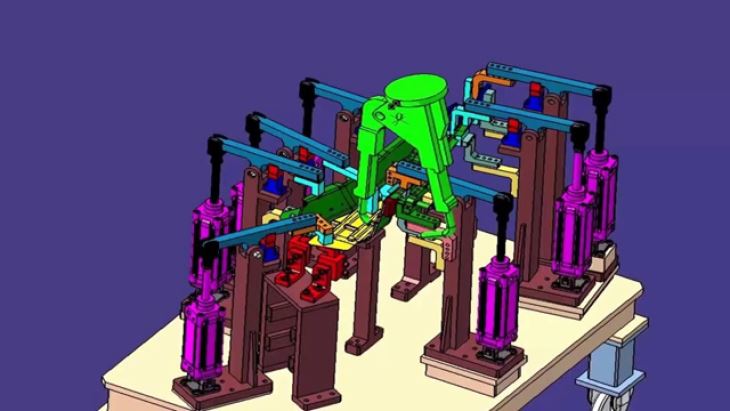
For example, when welding large auto pillar parts, such as those used in the construction of car frames, the jig needs to be able to hold the workpiece securely and provide sufficient access for the welding equipment. The Auto Pillar Parts Welding Fixture is specifically designed to meet the requirements of welding these large and complex parts. It features a sturdy construction and precise positioning mechanisms to ensure accurate and consistent welding.
2. Number of Welds
The number of welds required for a particular workpiece also has a significant impact on the maximum welding capacity of an auto welding jig. More welds mean more time and energy are needed to complete the welding process. Jigs designed for high-volume production environments, where a large number of welds are required, need to be optimized for speed and efficiency.
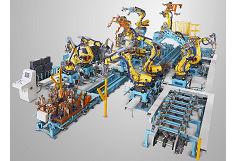
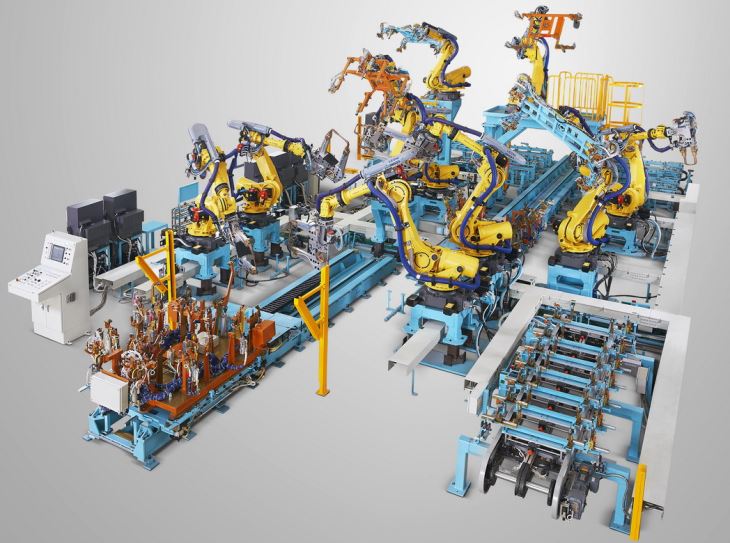
In a robotic welding setup, such as the Robotic Welding Fixture Line, the jig is designed to work in conjunction with robotic welding arms. These jigs can be programmed to position the workpieces accurately and move them through the welding process at a high speed, allowing for a large number of welds to be completed in a short period.
3. Welding Process
The type of welding process used also affects the maximum welding capacity of an auto welding jig. Different welding processes, such as MIG (Metal Inert Gas) welding, TIG (Tungsten Inert Gas) welding, and spot welding, have different requirements in terms of energy, time, and equipment.
For example, spot welding is a fast and efficient welding process that is commonly used in automotive manufacturing for joining thin sheets of metal. Jigs designed for spot welding need to be able to position the electrodes accurately and apply the necessary pressure to create a strong weld. On the other hand, MIG and TIG welding processes require more complex equipment and a higher level of control. Jigs used for these processes need to be designed to accommodate the welding torch and provide a stable platform for the workpiece.
4. Jig Design and Construction
The design and construction of the auto welding jig itself play a crucial role in determining its maximum welding capacity. A well-designed jig should be able to hold the workpiece securely, provide easy access for the welding equipment, and minimize the risk of distortion or damage to the workpiece during the welding process.
Our jigs are designed using advanced CAD/CAM technology to ensure precise dimensions and optimal performance. We use high-quality materials, such as steel and aluminum, to ensure the durability and reliability of our jigs. Additionally, our jigs are modular in design, which allows for easy customization and adaptation to different welding requirements.
Optimizing Welding Capacity in Our Auto Welding Jigs
As a supplier of auto welding jigs, we are committed to providing our customers with products that offer the highest level of performance and efficiency. To optimize the welding capacity of our jigs, we employ several strategies:
1. Customization
We understand that every automotive manufacturing process is unique, and our customers have different requirements. That's why we offer customized auto welding jigs that are tailored to the specific needs of each customer. By working closely with our customers, we can design and manufacture jigs that are optimized for their particular workpieces, welding processes, and production volumes.
2. Advanced Technology
We invest in the latest technology and equipment to ensure that our jigs are at the forefront of innovation. Our use of advanced CAD/CAM technology allows us to design jigs with precise dimensions and complex geometries. We also incorporate the latest automation and robotics technology into our jigs to improve efficiency and reduce labor costs.
3. Quality Control
We have a rigorous quality control system in place to ensure that every auto welding jig we produce meets the highest standards of quality and performance. Our jigs are tested thoroughly before they are shipped to our customers to ensure that they are free from defects and perform as expected.
Conclusion
The maximum welding capacity of an auto welding jig is a complex function of several factors, including workpiece size and thickness, number of welds, welding process, and jig design and construction. As a leading supplier of auto welding jigs, we are dedicated to providing our customers with products that offer the highest level of performance and efficiency. Our customized jigs, advanced technology, and strict quality control ensure that we can meet the diverse needs of the automotive industry.
If you are in the market for high-quality auto welding jigs and are interested in discussing your specific requirements, please do not hesitate to contact us. We look forward to the opportunity to work with you and help you optimize your welding process.
References
- Automotive Welding Handbook, various industry publications
- Technical specifications of welding equipment and materials used in automotive manufacturing