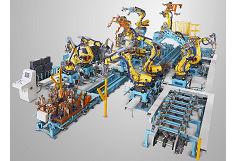
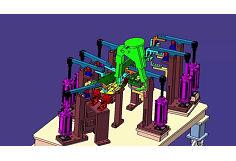
In the automotive manufacturing industry, the rear seats welding jig stands as a cornerstone in ensuring the precision and efficiency of the welding process for rear seats. As a dedicated rear seats welding jig supplier, we understand the importance of these tools in streamlining production workflows and enhancing the quality of the final products. However, we've also noted that the user - friendliness of these jigs can significantly impact their effectiveness in the hands of operators. In this blog, we'll explore various strategies to make rear seats welding jigs more user - friendly.
1. Design Optimization
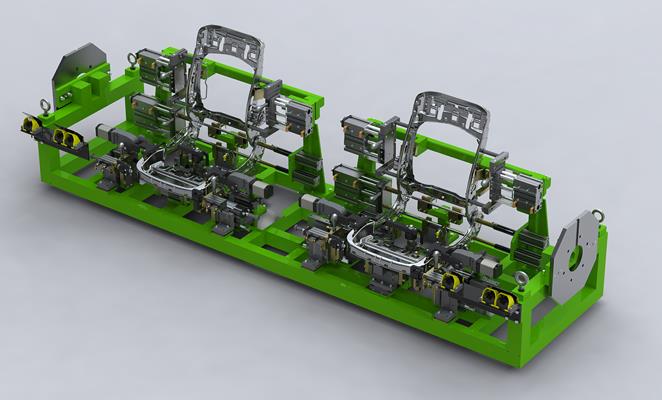
The design of a rear seats welding jig lays the foundation for its user - friendliness. First and foremost, the layout should be intuitive. Operators should be able to quickly understand how to position the rear seat components on the jig without requiring extensive training.
One effective approach is to use color - coding. Mark different areas of the jig where specific components are to be placed with distinct colors. For example, if there are seat backs and seat bottoms, the area for the seat back can be colored blue, and the seat bottom area can be red. This simple visual cue can save a significant amount of time and reduce errors during the setup process.
Another crucial aspect is adjustability. Each vehicle model may have slightly different rear seat dimensions. A user - friendly jig should be easily adjustable to accommodate these variances. Incorporating adjustable clamps, brackets, and stops allows operators to fine - tune the jig for different seat designs. This adaptability not only makes the jig more versatile but also reduces the need for multiple specialized jigs, saving both space and cost in the manufacturing facility.

2. Ergonomics
Ergonomics plays a vital role in making a rear seats welding jig user - friendly. Welding is a labor - intensive task, and if the jig is not designed with the operator's physical comfort in mind, it can lead to fatigue and decreased productivity over time.
The height of the jig should be adjusted to a comfortable working level. Most operators find it easiest to work when the jig is at or slightly below elbow height. This reduces the strain on the back, shoulders, and arms during the welding process. Additionally, the weight distribution of the jig should be balanced. If the jig is too heavy on one side, it can cause instability and make it difficult for operators to handle.
The shape of the handles and controls on the jig should also be ergonomic. Handles should be contoured to fit the hand comfortably, and controls should be easy to reach and operate without excessive force. For example, using large - diameter knobs for adjustments can make it easier for operators to make fine - tune changes even when wearing gloves.
3. Safety Features
A user - friendly rear seats welding jig is also a safe one. Incorporating safety features not only protects the operators but also enhances their confidence when using the jig.
One key safety feature is the presence of protective shields. Welding generates intense light, heat, and sparks, which can be harmful to the eyes and skin of operators. Transparent protective shields can be installed around the welding area to block these hazards while still allowing operators to monitor the welding process.
Emergency stop buttons are also essential. These buttons should be prominently placed and easily accessible from all sides of the jig. In case of an emergency, operators can quickly halt the welding process to prevent accidents. Additionally, the jig should be equipped with safety interlocks. For example, if the clamps are not properly engaged or the components are not correctly positioned, the welding equipment should not be able to start, preventing potential welding defects and safety risks.
4. Quick Setup and Changeover
In a fast - paced automotive manufacturing environment, the ability to quickly set up and change over a rear seats welding jig is crucial for maximizing productivity.
Pre - calibrated alignment systems can significantly reduce setup time. These systems use laser or mechanical guides to ensure that the jig is correctly aligned with the welding equipment and other manufacturing processes. Operators simply need to follow the alignment indicators, which minimizes the time spent on trial - and - error alignment.
For changeover between different vehicle models or seat designs, modular components can be highly beneficial. The jig can be designed with interchangeable parts that can be quickly swapped out. This way, instead of completely reconfiguring the entire jig, operators can simply remove and replace a few key components. This not only speeds up the changeover process but also reduces the risk of misalignment during re - setup.
5. Clear Documentation and Training
Providing clear documentation and training is an often - overlooked aspect of making a rear seats welding jig user - friendly. Even the best - designed jig will not be used effectively if operators do not understand how to operate it correctly.
Comprehensive user manuals should be provided with the jig. These manuals should include detailed diagrams, step - by - step instructions for setup, operation, and maintenance, as well as troubleshooting guides. The language used in the manuals should be simple and easy to understand, avoiding technical jargon as much as possible.
In addition to documentation, on - site training should be offered. Our team of experts can visit the customer's manufacturing facility to provide hands - on training to the operators. This allows the operators to ask questions in real - time and gain practical experience in using the jig. Regular refresher training sessions can also be organized to keep the operators updated on any new features or improvements to the jig.
Our Product Range and Contact for Purchase
As a reliable rear seats welding jig supplier, we are committed to providing high - quality and user - friendly products. In addition to rear seats welding jigs, we also offer a wide range of other welding fixtures and checking fixtures. You can explore our Automotive Seat Welding Fixture and Front Bumper Welding Fixture for more options. If you are dealing with car stamping parts, our Car Stamping Parts checking fixture can also meet your needs.
If you are interested in our products and would like to engage in a procurement negotiation, we invite you to reach out to us. Our team of professionals is ready to discuss your specific requirements, provide detailed product information, and offer competitive quotes. We look forward to working with you to enhance your automotive manufacturing processes.
References
- Standards of automotive manufacturing equipment design, related industry research reports.
- Case studies of successful user - friendly welding jig implementations in automotive factories.